

Fake WhatsApp screenshots have a bad reputation because, yes, people use them to lie. But the format itself is just a wrapper: bubbles, timestamps, read receipts, a profile photo in a circle. Like a prop receipt in a movie, it can be used responsibly, and sometimes it’s the cleanest way to communicate an idea.
If you’ve ever tried to explain “the vibe” of a conversation without writing a 400-word transcript, you already understand the appeal. Here are seven above-board reasons someone might generate a fake WhatsApp conversation, without trying to fool anyone.
1) Writing memes, punchlines, and shareable jokes
Some jokes only work when they look like a chat. The timing matters. The accidental overshare lands harder when it arrives as a single green bubble. The awkward silence is funnier when there’s a visible gap between messages.
Meme pages and creators often draft a few variations of the same exchange to see which one reads best. A generator lets you tweak small things, like whether “lol” is followed by an immediate clarification (worse) or a pause (better). You can do this in Notes or Google Docs, sure, but the chat layout provides instant feedback on pacing.
2) Building skits and short-form video scripts (without roping in friends)
A lot of TikTok and Reels comedy is basically texting as theater. One person plays multiple characters, and the “conversation” becomes the set. You can storyboard the bit as a WhatsApp exchange first, then decide what to film.
This is also a way to protect real people. Instead of screenshotting actual friends and then covering names with clumsy scribbles, creators can fabricate the exchange from scratch, using placeholders, fake avatars, and neutral wording. Tools like a fake whatsapp chat mockup make it easy to set up the layout for WhatsApp specifically (or swap to other platforms if the joke needs different visual cues).
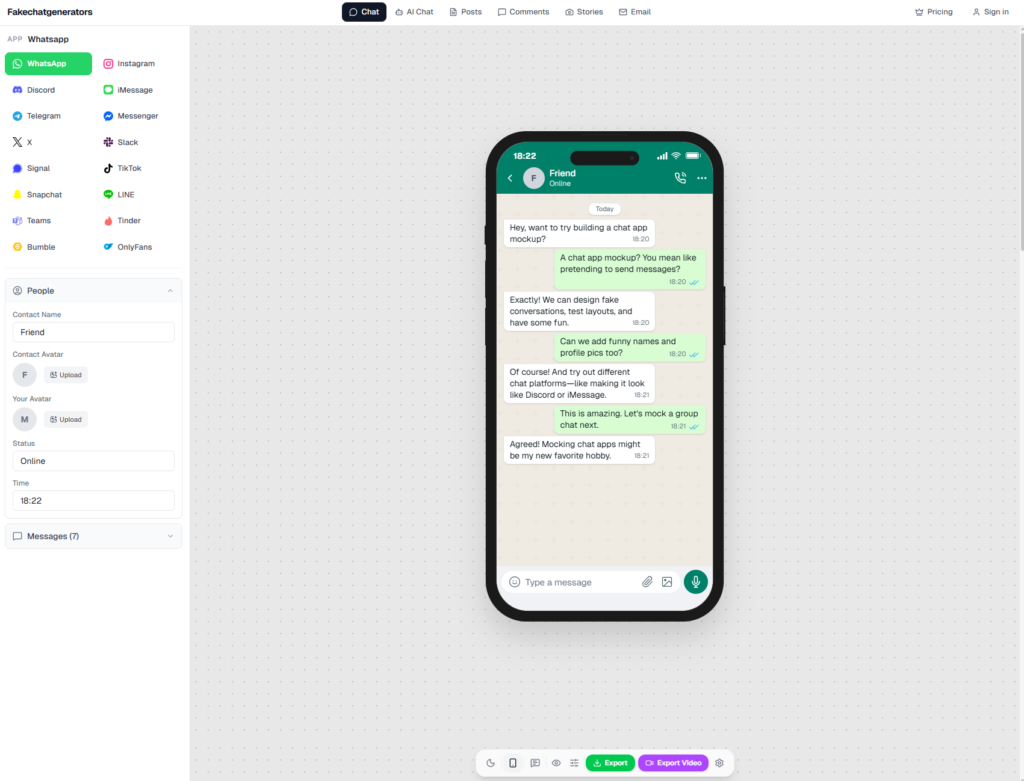
fakechatgenerators.com lets you mock up chat screenshots across 16 platforms
3) Film, TV, and ad production: prop messages that won’t trigger legal headaches
If you’ve worked on a small production, you know the pain: the director wants “a realistic texting scene,” but nobody wants to clear real messages, real phone numbers, or any identifiable contact photos. Then there’s continuity. The message thread needs to match across takes, days, and devices.
A fake conversation solves all of that. It’s controlled, repeatable, and you can keep it deliberately generic. You can even adjust details for the camera, larger font sizes, shorter lines, fewer bubbles, anything that reads quickly on screen. It’s the same logic as using a fake newspaper headline in a set dressing shot.
4) UX and product design: realistic screens for prototypes and user testing
Designers spend a surprising amount of time hunting for “realistic filler content.” The problem with Lorem Ipsum is that nobody reads it. The problem with real messages is, well, they’re real.
A WhatsApp mockup helps in a few ways:
- User flows: “Invite a friend,” “confirm a booking,” “share a receipt,” and “send a verification code” all look different in chat form.
- Edge cases: message failures, deleted messages, unknown numbers, contact name changes.
- Accessibility checks: whether key info is visible without zooming, especially on smaller screens.
A controlled fake thread gives you something that looks like a lived-in device without dragging privacy into the process.
5) Classroom examples and training materials (especially when privacy matters)
Teachers, HR teams, and corporate trainers often need examples of workplace boundaries, miscommunication, consent, bullying, or phishing attempts. A realistic chat format is more engaging than a bullet list, and it mirrors what people actually see on their phones.
The key is transparency: label it as a fabricated scenario and keep it free of identifiable info. If you’re teaching students how to spot manipulation, you can even include purposeful “tells,” like suspicious links, urgent language, and pressure tactics, then discuss them line by line.
6) Storyboarding for interactive fiction and game dialogue
Interactive stories have branches. The same character might respond warmly in one path and coldly in another. A WhatsApp-style layout makes it easy to preview tone before you write 20 more pages of dialogue.
It also helps writers see when a character’s voice slips. A thread that looks natural will usually have small imperfections: fragments, interruptions, double-texting, the occasional “wait, sorry, wrong chat.” When you view it as bubbles instead of paragraphs, stiff dialogue sticks out fast.
7) Demonstrations of misinformation, plus proof you didn’t use a real screenshot
Sometimes you need to show how fake screenshots are made, precisely so people learn not to trust them. Journalists and trust and safety teams do this when explaining rumors, scams, or manipulated “leaks.” But even in an educational setting, the moment you show a fake, someone will ask, “How do we know this is fake?”
That’s where verification tooling can help. An ai image detector like Sightova, for example, is built to flag AI-generated media, NSFW content, violence, and document tampering, and it claims 98.7% detection accuracy across 50+ generative models with sub-150ms latency. Even if you’re not running formal forensics, having a clear method to validate assets is useful when the goal is education, not deception.
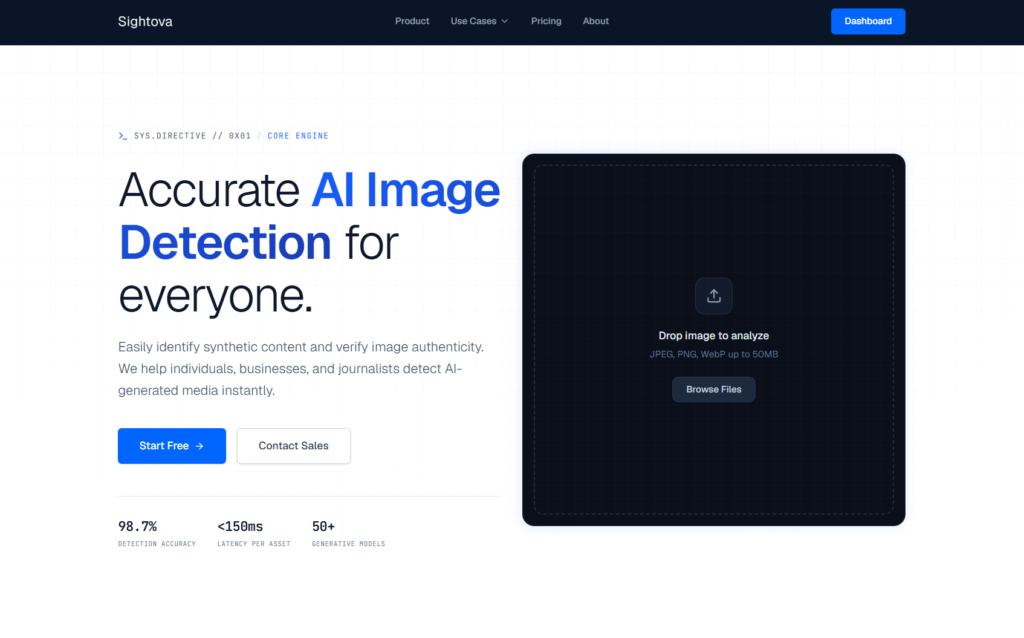
sightova.com flags AI-generated, tampered, NSFW, and violent imagery in milliseconds
A quick (important) line between “fake” and “fraud”
If you’re generating a fake WhatsApp conversation for any of the reasons above, two habits keep you on the right side of the line:
- Label it when it leaves your laptop. Watermark it, caption it, or include “mockup” in the file name if it’s being shared internally.
- Avoid real identifiers. No real phone numbers, faces, names, usernames, company logos, or recognizable profile photos unless you have permission and a reason.
A fake chat can be a prop, a sketch, a lesson, or a punchline. Used that way, it’s just another creative format. The trouble starts when it’s presented as evidence.